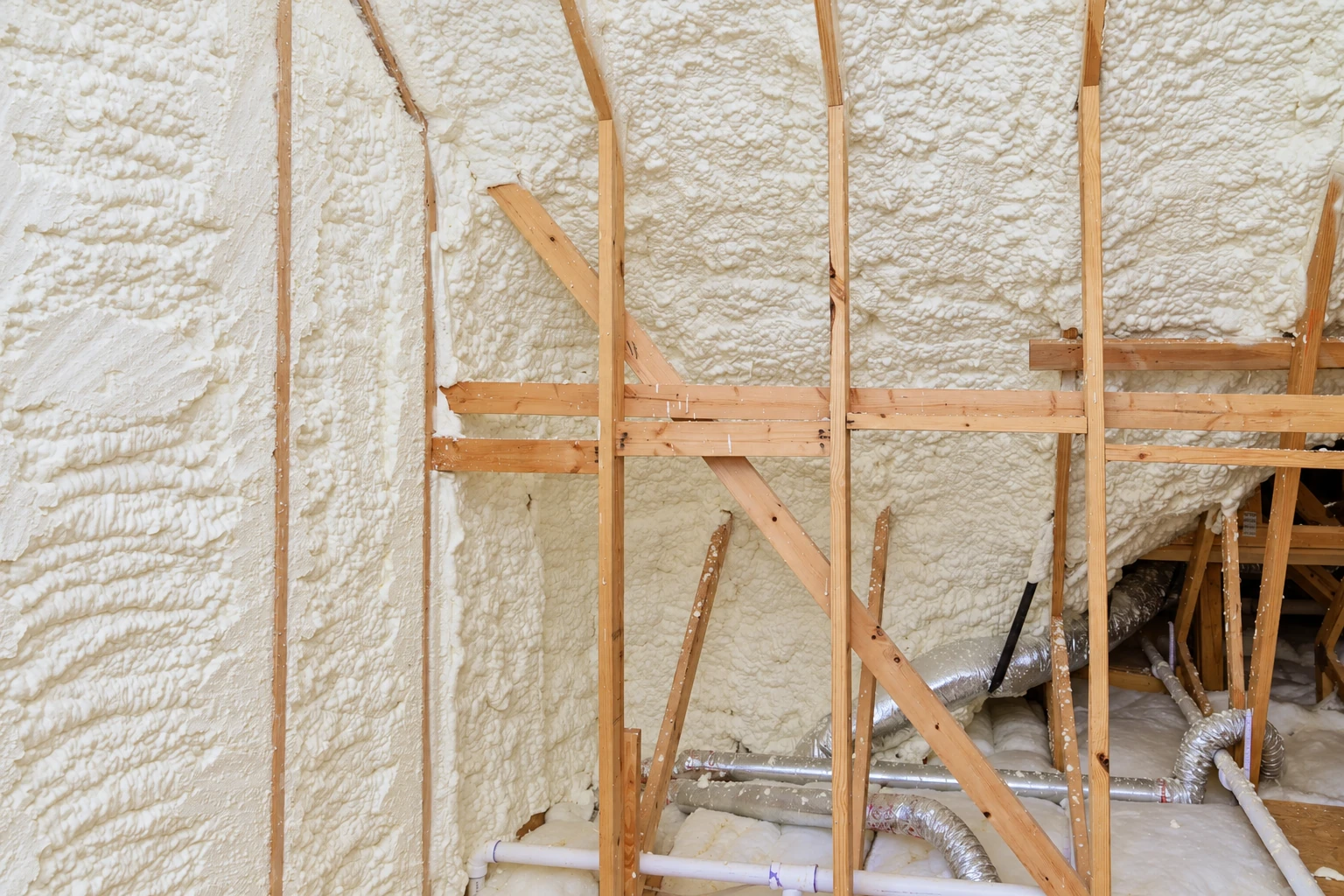
It got wet from a leak
Soaked insulation mats down and holds moisture against the wood, which can grow mold, so covering it with fresh material just hides a problem that keeps working underneath.
Insulation soaked by a leak, full of droppings or just old and flat? We find out why, clear it out and leave the attic ready.
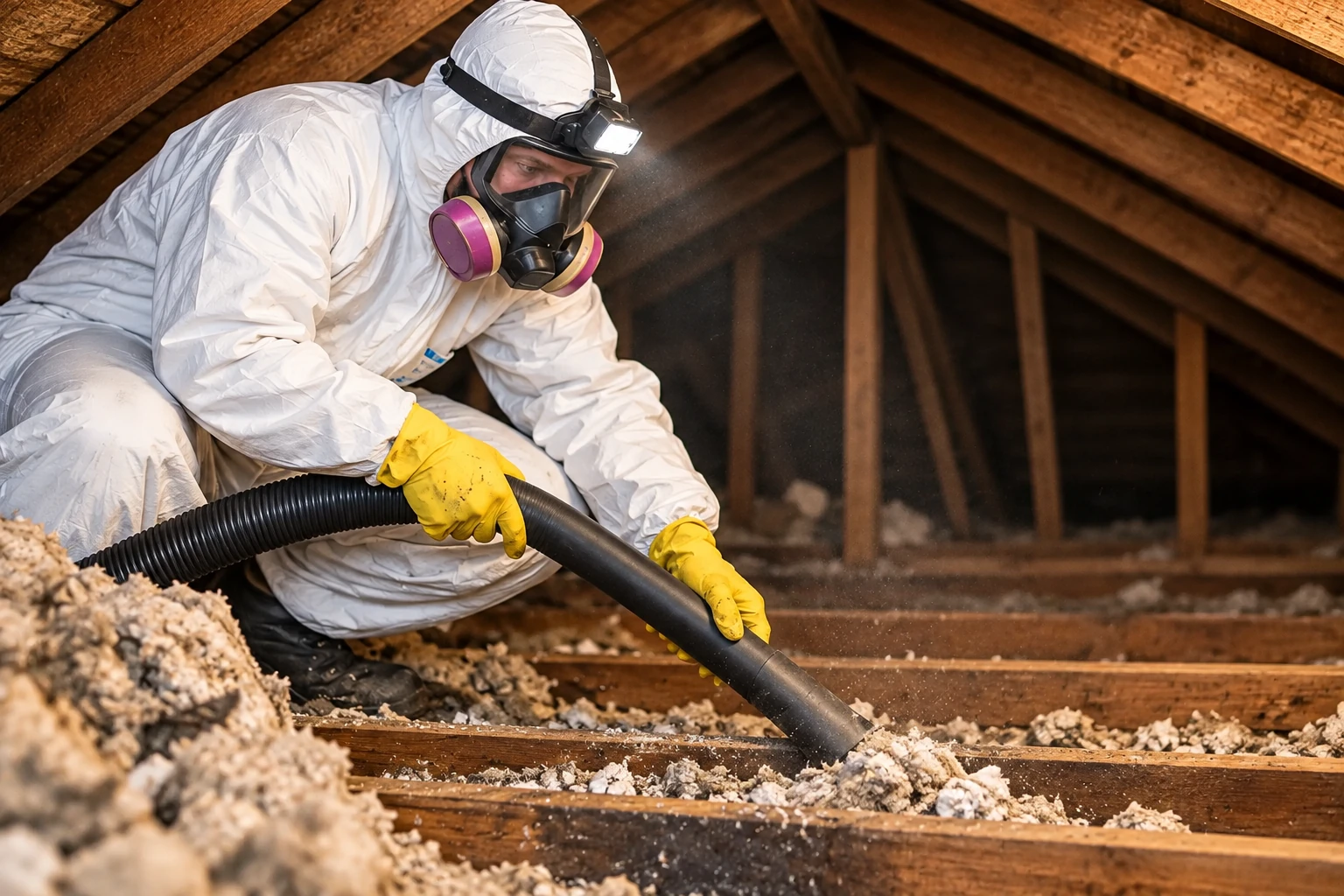
Insulation removal in Corona means our crew takes the old insulation out of your attic, so we can see the framing, the gaps and any damage underneath and fix them before anything new goes in.
Most calls start with a clue, like a ceiling stain, droppings by the hatch, a smell on hot days or an upstairs room that won't cool off. At Truetemp Corona Spray Foam Insulation we're based in Corona and work across the cities around it, from Riverside to Chino Hills, and we're fully licensed and insured in a trade the state licensing board treats as its own. The price moves with the attic's size, how easy it is to get around in and the shape the old material's in, since soaked or dirty insulation takes more work than clean, dry blown-in, the loose fill that goes in through a hose. The schedule turns on the same things, plus anything that makes us stop, like vermiculite, and I come out to look and write up a free estimate on site so you get your own number.
I'd rather spend extra time with a flashlight than guess, because whatever ruined the old insulation, a roof leak or a gap mice use, has to be fixed first.
If what's up there is clean and dry, I'll tell you honestly whether it needs to come out at all, since sometimes sealing gaps and topping it up does the job.
Before we leave, we show you what came out, what was under it and what we fixed, so you can explain it to the next person who works on your house.
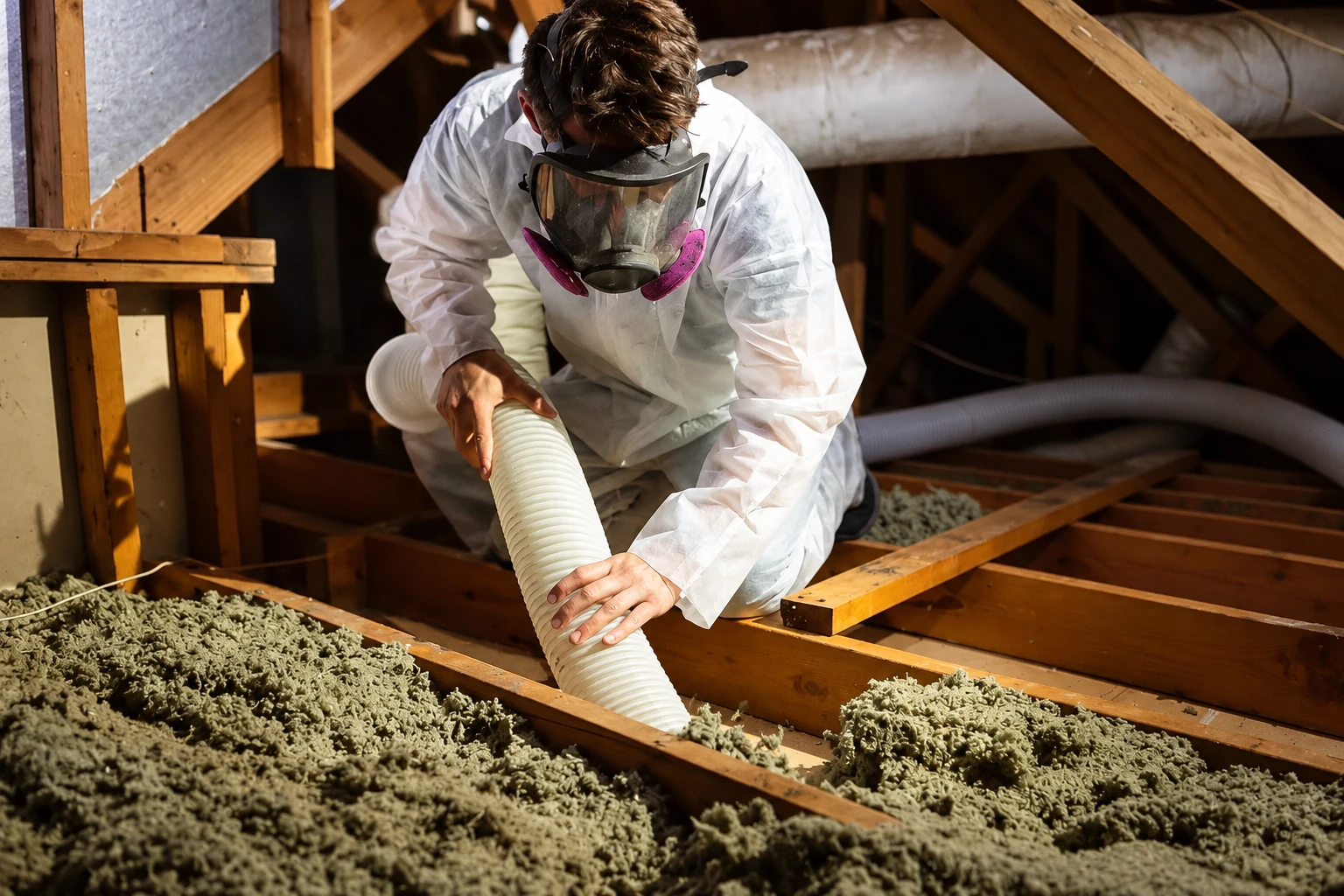
I start with a flashlight, checking how many inches are up there, whether it's wet, whether pests have been in it and what kind it is, and if it looks like vermiculite we stop and talk it over rather than stir it up. When it's coming out, our crew covers the path from the hatch to the door, and the lead installer runs the job while the crew vacuums the old material through a hose into bags, clearing the edges by the eave vents too so the attic can breathe again. With the floor bare, we look for leaks, damaged framing and open gaps around can lights, pipes and the hatch, and deal with them before anything new goes in. Riverside County landfills accept old insulation only when it holds no asbestos, and the county's household hazardous waste sites won't take asbestos either, so anything that might contain it doesn't go out with our load.
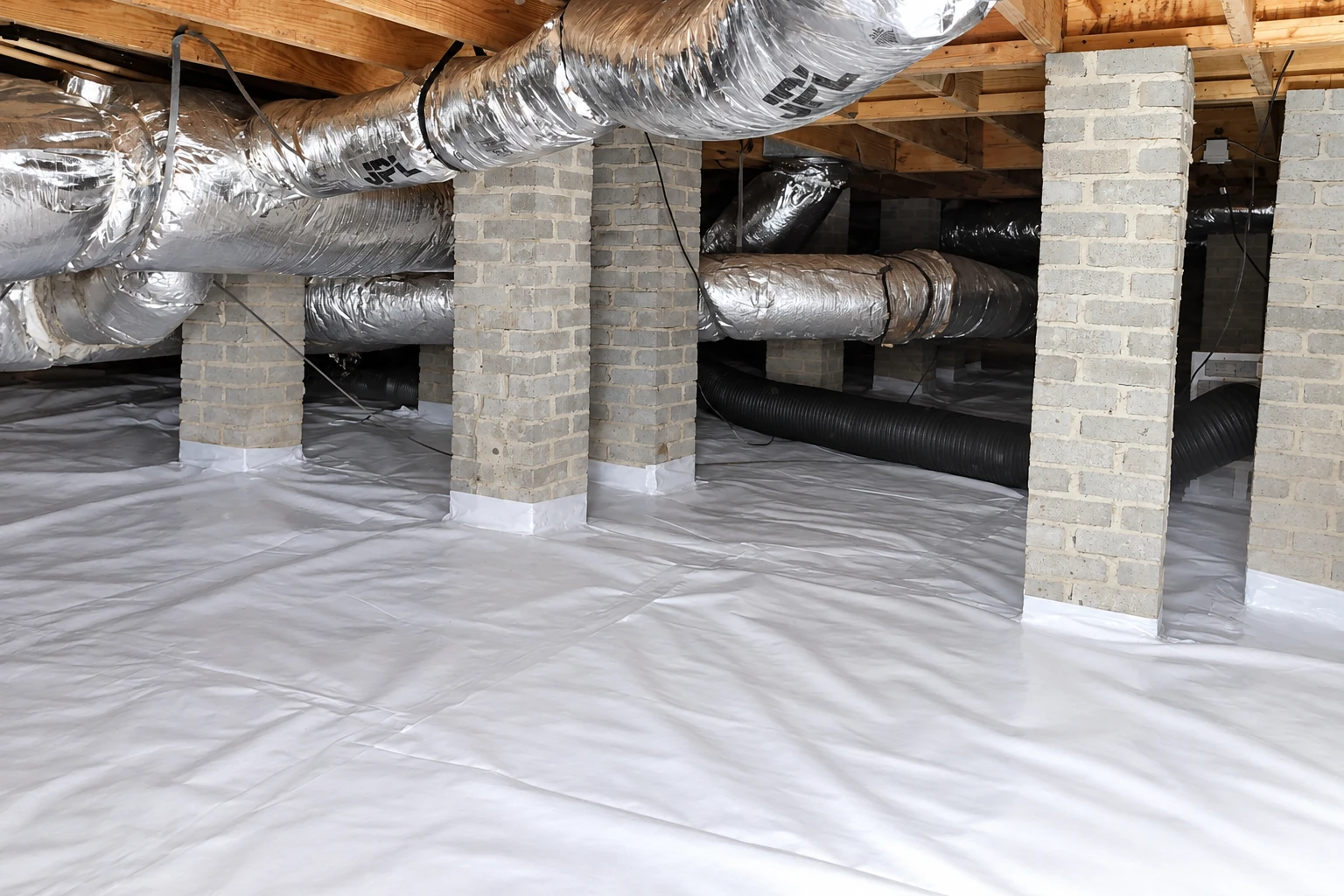
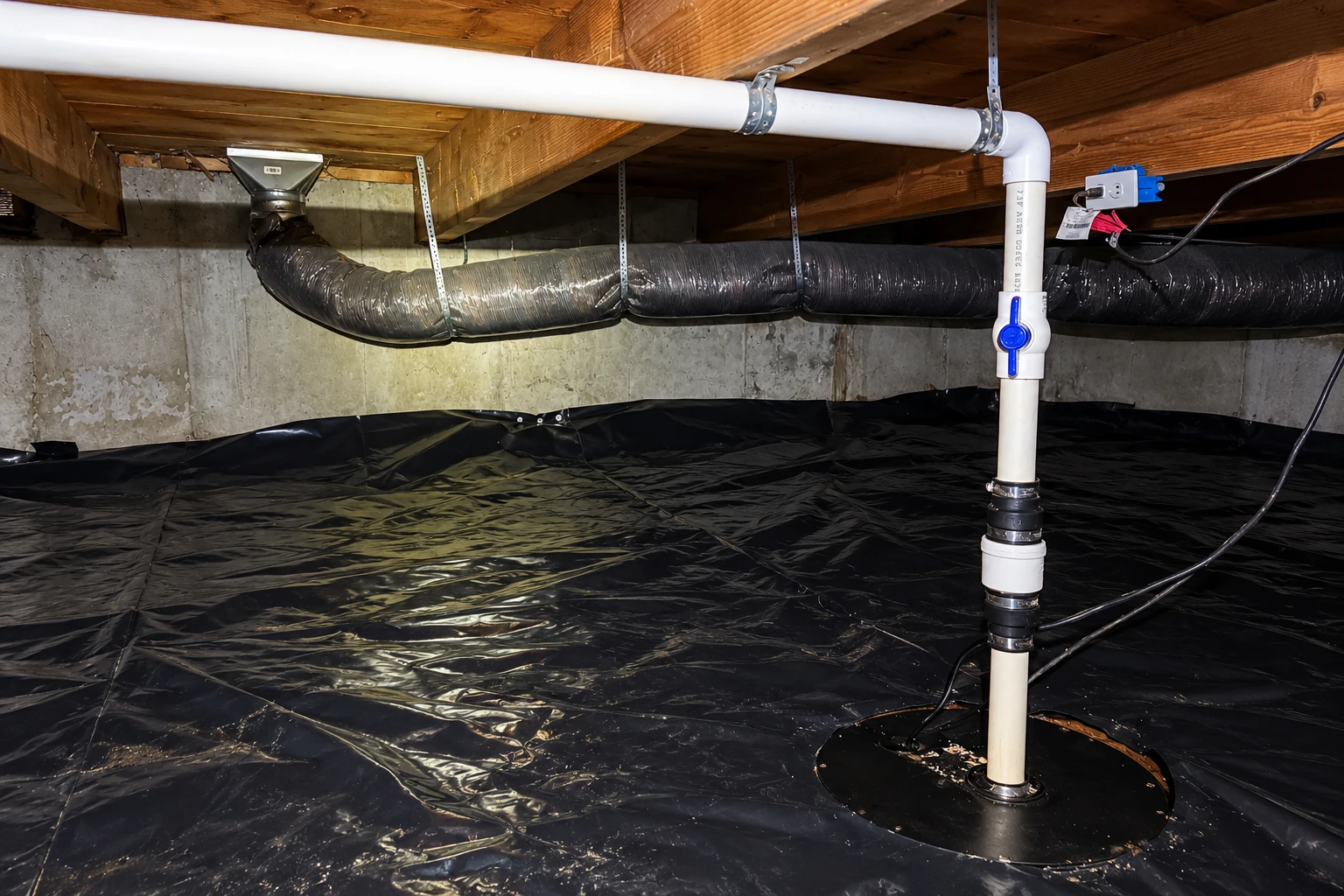
Once the attic's clear, sealing those gaps and blowing in fresh loose fill usually beats spray foam, because foam costs more, though it earns that price when your ductwork runs up there. Taking old insulation out also tends to raise questions elsewhere. If the floors stay cold, the trouble may be under the house, and we handle crawl space insulation too. If one room stays hot no matter what the AC does, the walls may be thin or empty, which is a job for wall insulation.
Soaked insulation mats down and holds moisture against the wood, which can grow mold, so covering it with fresh material just hides a problem that keeps working underneath.
Droppings and nests stay in old insulation long after the pests are gone, and fresh material over the top keeps the smell and the mess right where they were.
After a fire, insulation can hold soot and smoke smell in the attic for a long time, so it usually comes out along with the rest of the cleanup.
With the old fill gone, we can reach the gaps around can lights, pipes and the hatch and seal them, so the new insulation isn't fighting a draft.
We reply within one business day, then I come out, look at the attic and write up your estimate on site. It's free, and there's no pressure to book.
The square footage of your house or attic floor gets us close, because size is the first thing that sets the work and how long the crew is up there.
A phone photo of what's up there helps, since batts, loose fill and anything that looks like small pebbles each mean a different job and a different plan.
Droppings, a musty smell or ceiling stains tell me what to look for when I'm up there, and what else may need fixing before new insulation goes in.
Examples of bare attic floors, bagged old fill and fresh loose fill, to help you picture the finishes and layouts we'd talk through.
Straight answers to what Corona homeowners ask most about cost, vermiculite, doing it yourself and how long removal takes.
Removing old attic insulation usually costs about $1 to $2 per square foot across the US, and that covers taking the existing material out. Your attic's size and condition decide where you land in that range. I'll look at it on site and give you your own number with the free estimate.
Only if it has to be disturbed, and then by a trained professional. The EPA says to treat vermiculite as if it contains asbestos, that removal may not be needed if it's closed off and left alone, and that testing first isn't necessary. It looks pebbly, usually gray-brown or silver-gold. If we spot it, we stop and talk it over with you.
You can if the material is dry and clean and you can walk around in the attic, but it's a poor choice otherwise. Doing it yourself saves the labor, which is most of the cost, though you'll still rent an insulation vacuum, buy protective gear and pay for disposal. The EPA strongly recommends against removing vermiculite yourself.
Anywhere from about four hours to two days or more, depending on how big the attic is and how complicated the job gets. Tight attics you have to crawl through, wet or dirty material and gaps that need sealing once it's out all add time. That figure is general, and your attic settles the rest.
Not just any contractor. The licensing board says contractors with an asbestos certification can do asbestos removal only within the license classes they already hold. That's one reason we stop and talk when something looks like vermiculite, rather than pulling it out with the rest of the old insulation.
We take calls until 11 PM on weekdays and 10 PM on weekends, so call (951) 393-1170 or use the form tonight.