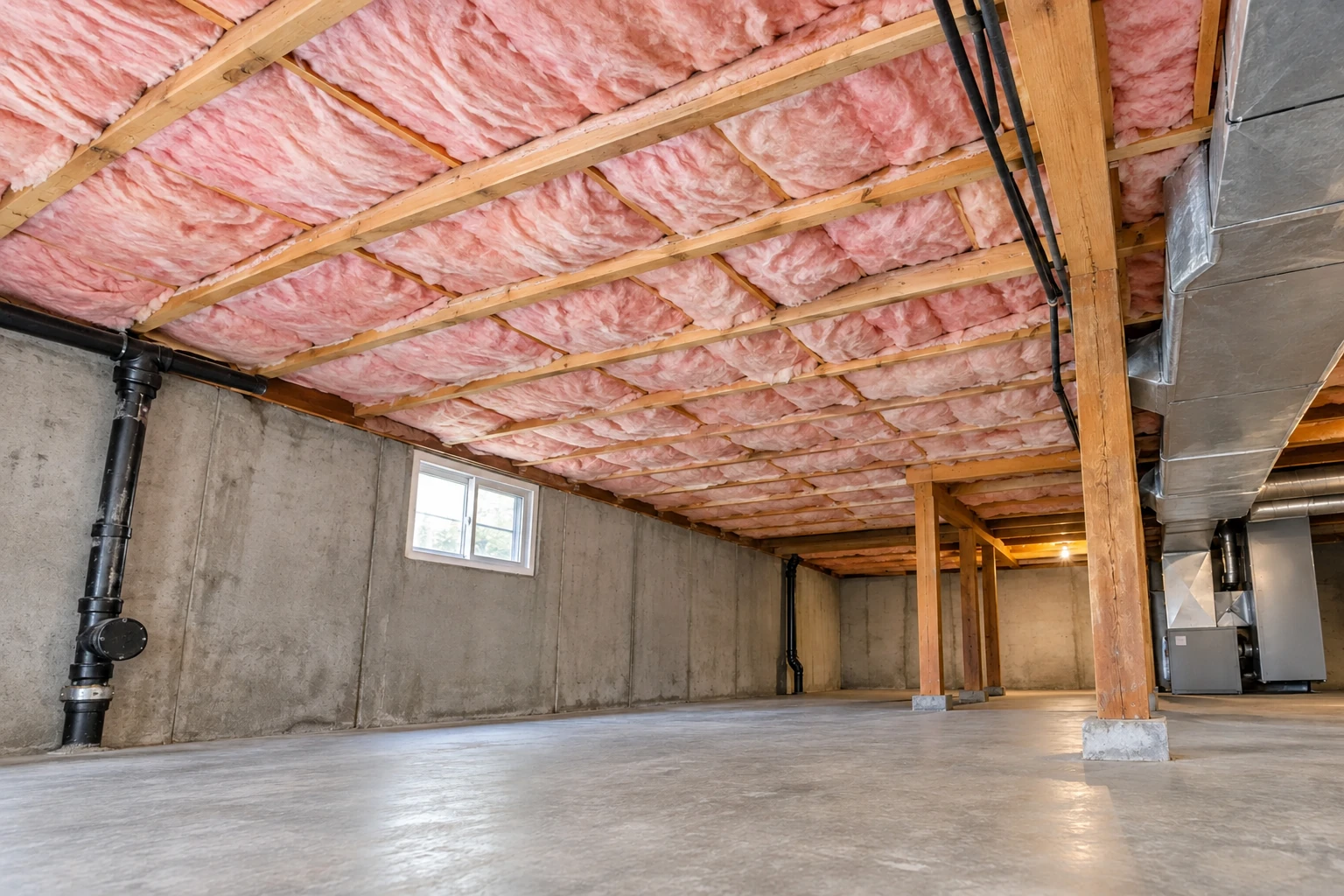
Spray foam insulation
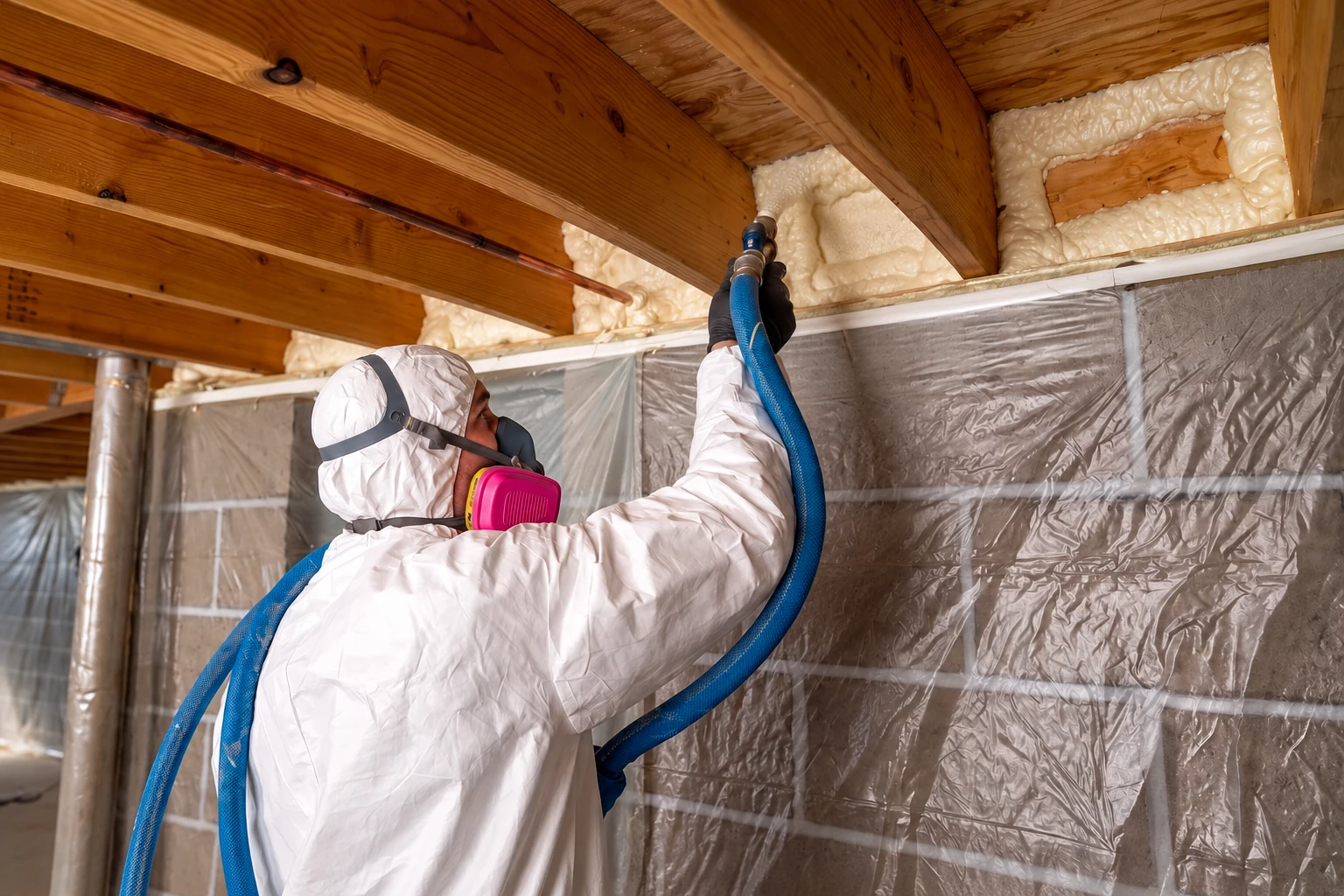
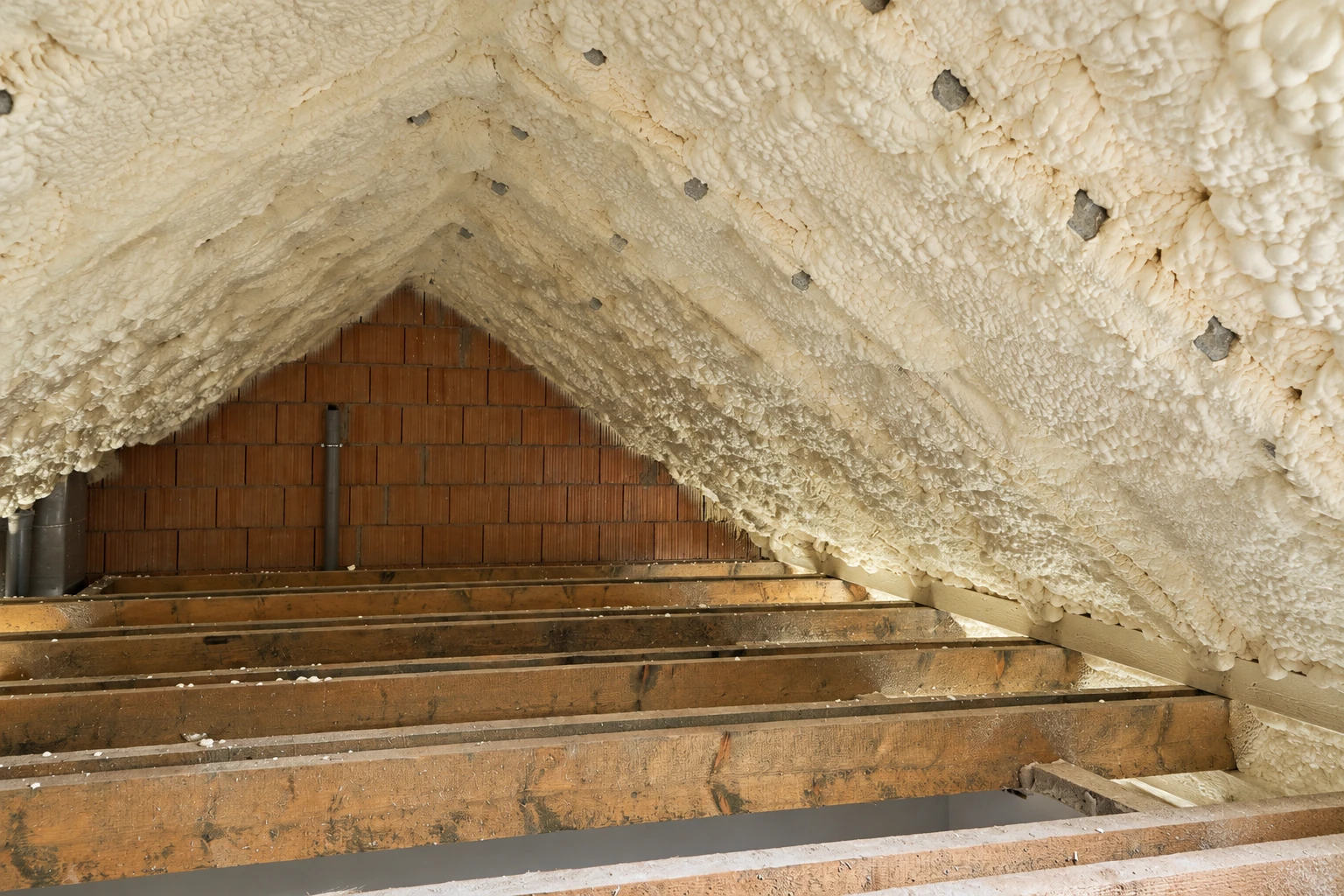
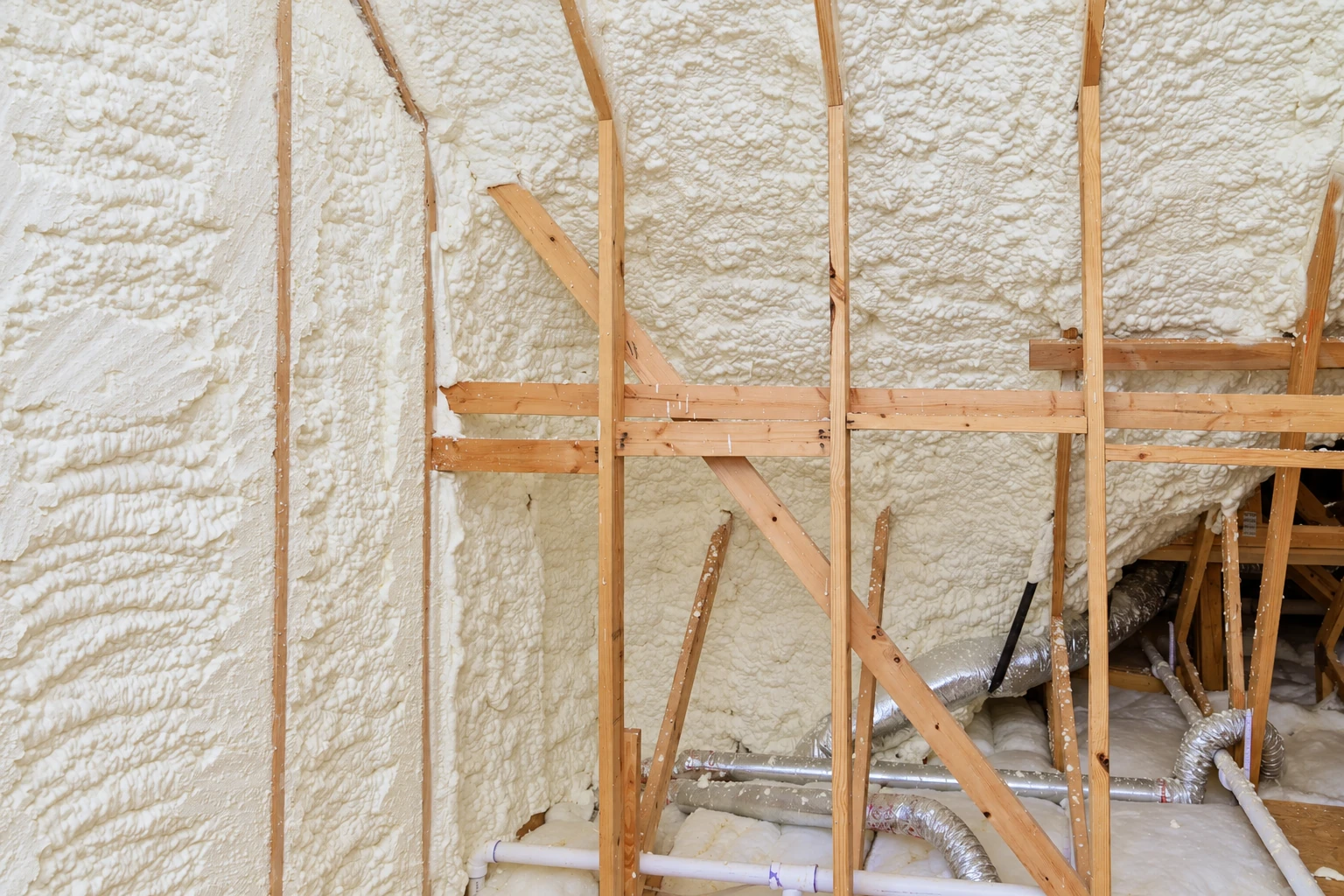
Foam sprayed on the roof deck or in the walls insulates and stops air in one pass. It's the option we bring up when the ducts and air handler sit in a hot Eastvale attic.
Truetemp Corona Spray Foam Insulation is an insulation contractor based in Corona that works in Eastvale. We seal and insulate attics, walls and the room over the garage so the upstairs stops fighting the AC all summer.
Eastvale is just up the road from us in Corona, and most of what we climb into here is newer. Think two-story stucco tract homes set close together, with the air handler and ductwork up in the attic. The calls sound a lot like the ones we get from Chino Hills and Norco. The upstairs bedrooms are hot by afternoon, the room over the garage never cools off and the power bill climbs every summer.
The price here moves with the size of the attic, how many inches are already up there, whether any old material has to come out and whether sealing plus loose fill will do or foam makes more sense. The schedule turns on the same things, and on how long you'd need to stay out of the house if we're spraying foam. I come out and look before I write up the estimate, so you get a number for your house and not a guess. With ductwork running through so many Eastvale attics, what happens up there decides most of how the rooms below feel.
I come out myself and spend time in your attic with a flashlight before writing anything up, because a hot bedroom usually has a cause you can find if you look.
Sealing the gaps and topping up loose fill usually wins. When the ductwork lives up there, as it does in many Eastvale homes, foam costs more but can pull those ducts out of the heat.
If what's up there got soaked by a roof leak or is full of droppings, we won't bury it under fresh material, because the smell and the moisture stay and you've paid twice.
Foam sprayed on the roof deck or in the walls insulates and stops air in one pass. It's the option we bring up when the ducts and air handler sit in a hot Eastvale attic.
Most hot upstairs rooms start overhead, so we measure the inches already in your attic, fix thin edges and blocked eave vents, and bring the whole space up evenly.
Blown-in is loose fill sent up through a hose, so we can top up an existing attic without tearing anything out. In a newer tract home it's often the simplest fix.
We look at the attic, the walls, the garage ceiling and the floors to find which part is letting the heat in before we suggest spending money on any of it.
When old insulation is soaked, flattened or full of droppings, we vacuum it out and clean up before new material goes in, so the problem doesn't stay hidden underneath.
Where a house sits over a crawl space instead of a slab, insulating under the floor helps with cold floors in winter and damp air drifting up into the rooms.
Walls are harder to reach than an attic, so we usually fill them through small holes or during a remodel, then patch the holes so you'd have to hunt for them.
Air sealing is closing the gaps around pipes, wires and fixtures before we insulate. Insulation slows heat, but it can't stop a draft blowing straight through it.
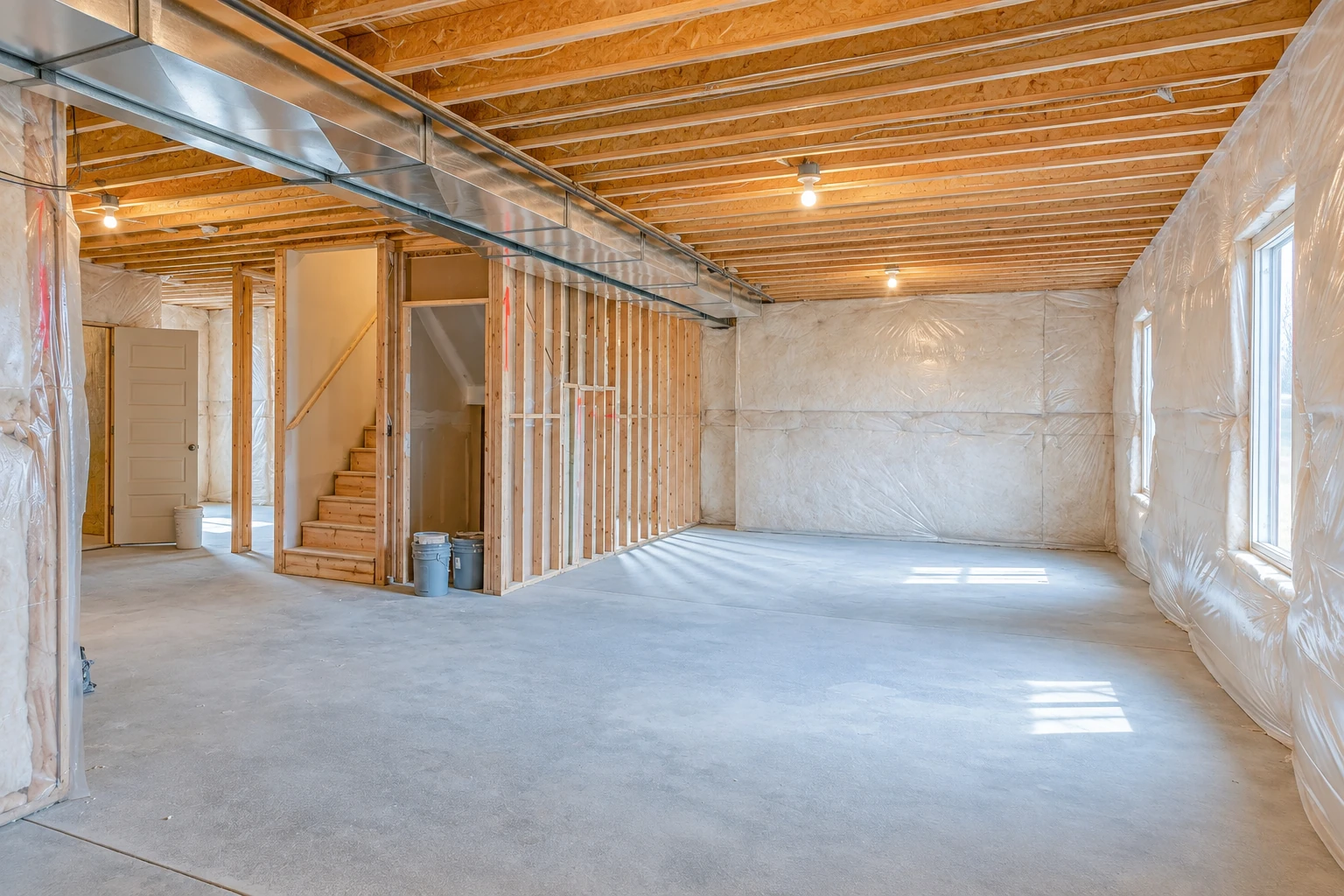
Basements are rare in Eastvale, but where a house has one, we insulate the walls with materials that can handle moisture coming through the concrete.
Closed-cell foam is dense foam that also blocks moisture. That makes it the one we reach for in crawl spaces, rim joists and other spots that tend to get damp.
Open-cell foam is softer and lighter than closed-cell. It works well along a roofline over attic ductwork and for quieting sound between rooms, and it costs less.
We insulate small commercial and rental buildings for landlords and owners, and we plan the work around tenants so nobody's space is out of use longer than it has to be.
A heavy liner laid over the dirt keeps ground moisture out of the crawl space. That protects the framing and keeps musty air from working its way into the house.
We put vapor barriers wherever moisture could get into the insulation, such as crawl spaces and certain walls, because insulation only keeps doing its job while it stays dry.
Before we add anything to your attic, we seal the can lights, bath fans, wall tops and the hatch, so the room over the garage stops pulling in hot attic air.
Retrofit work adds insulation to a finished house without gutting it. We go in through the attic, small wall openings or the garage ceiling and keep the mess as small as we can.
Send the form and we'll reply within one business day to set a time. I come out, look over the attic and the trouble rooms, and write up your estimate, with no obligation to book.
Let us know which rooms run hot or drafty and what time of day it's worst, because the time and the side of the house usually point right at the cause.
If you know roughly when the house was built, or whether anyone's added insulation since, tell us, since that tells me what's probably up there before I climb in.
We're fully licensed and insured, and the estimate is yours to keep whether you hire us or not. Your satisfaction, guaranteed, and no pressure to book either way.
Here's what people in Eastvale ask us most often about permits, the local code, leaving the house and that hot upstairs.
The city's Building Safety Team issues building permits and inspects work on homes in Eastvale. You can reach them at 951.703.4450 or permits@eastvaleca.gov with permit questions. We check with the city on every job, and if yours needs a permit, we handle the application and meet the inspector.
Eastvale uses the California Residential Code with its own local changes, and the city ordinance we've read adopts the 2022 edition. That ordinance also puts Eastvale in Climate Zone 11 and says the city has stricter energy efficiency requirements because of it. The ordinance doesn't say whether a newer edition has replaced it, so the Building Safety Team can confirm what applies today.
For spray foam, yes. Everyone, pets included, stays out while we spray and until the re-entry time the foam maker sets for coming back inside, and we'll tell you yours before we start. Blown-in loose fill is different. You can usually stay home and just keep the kids and pets away from the attic hatch.
Usually it's because the attic is pushing more heat down than it should, even in a newer house. The ducts bake up there all afternoon, gaps around can lights and the hatch leak hot air, and the coverage often runs thin at the edges. A careful look with a flashlight usually shows which of those it is.
These are the cities with their own page on our site, and we work in plenty of others. If yours isn't listed, call (951) 393-1170 and ask.
We answer until 11 PM on weekdays, so call (951) 393-1170 after work or send the form about your project.