Bare dirt under the floor
If there's nothing over the dirt, the ground is free to send its moisture up toward your framing. Covering it is the plain fix, once any water down there is handled.
Damp smell under the house or a torn old sheet down there? We fix the water first, then cover the ground wall to wall.
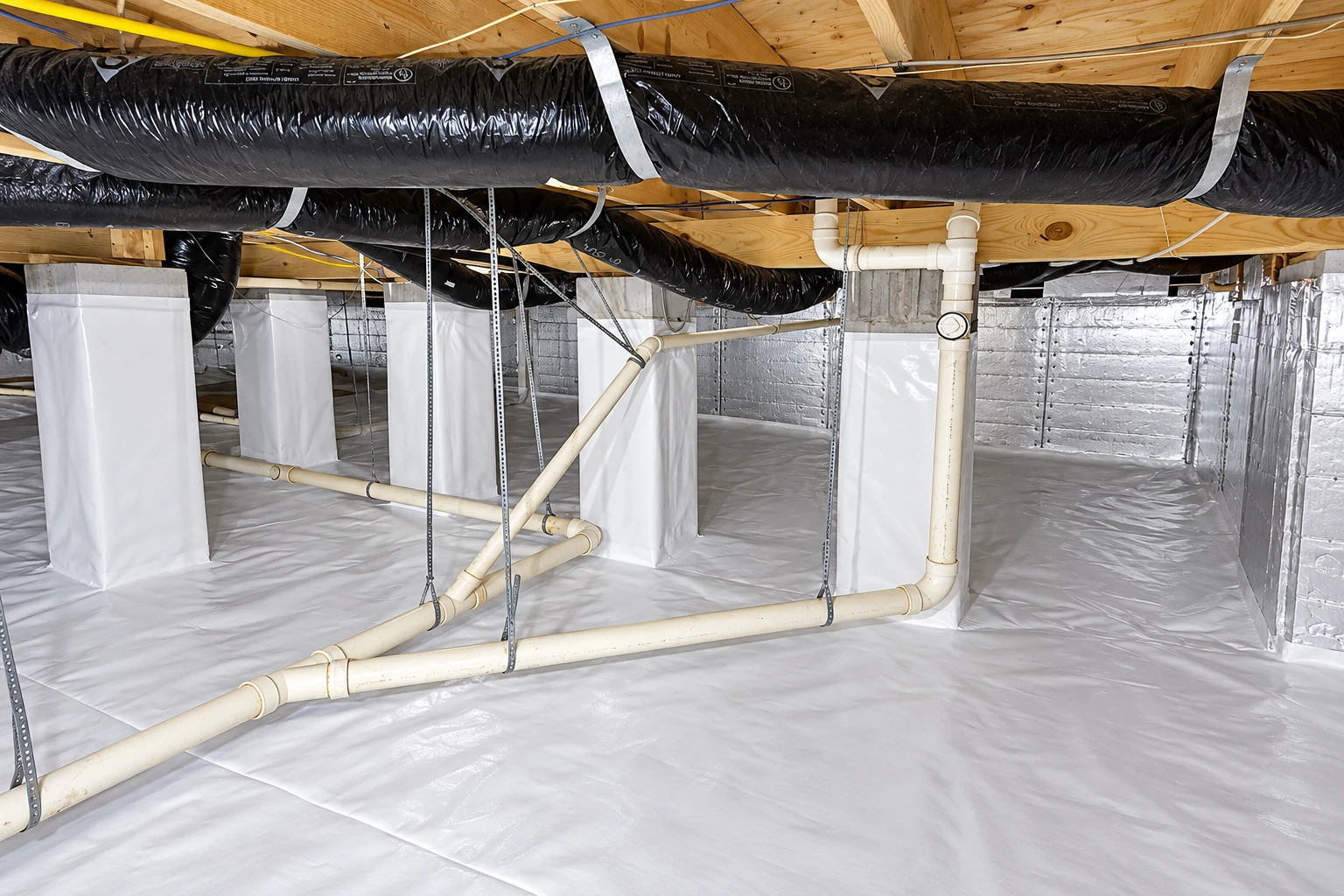
A crawl space vapor barrier is a plastic sheet, usually polyethylene, that covers the dirt under your house in Corona, and a well-installed one helps limit the ground moisture and soil gases, radon among them, that rise into the space.
Most people call me because the floors feel cold or damp, there's a musty smell, or the old sheet down there is torn up or missing. The price moves with how big the crawl space is, how heavy a sheet you pick, how far up the walls and piers it runs, and whether you keep the vents open or seal the space, since sealing brings its own air or dehumidifier to plan for. The schedule mostly turns on water, because standing water, a plumbing leak or a downspout dumping against the foundation gets fixed before any plastic goes down. Before any job I check with the city or county office, since some areas we work in fall under the county, and if a permit's needed we handle the application and meet the inspector. I come out, get under the house with a flashlight and write up the estimate, so you get a figure for your crawl space instead of a guess.
I come out myself, crawl under the house and write the estimate, then a lead installer runs the job, so the person who found the problem is the one who shaped the fix.
If the real trouble is a leaking pipe or a downspout, I'll tell you, because a new sheet won't fix either one, and sometimes the smaller fix is the right one.
We're fully licensed and insured, and when we're done I'll walk you through what we did so you can explain it to the next person who works under your house.
First we clear out debris and anything sharp, because a nail or a broken hanger will punch a hole in new plastic the first time somebody crawls over it. Then comes the water. A barrier over a wet floor just hides trouble, so standing water, leaks and drainage get sorted out before the sheet goes down. Once the ground is ready, our crew lays the sheet and takes it as far up the walls and around the piers, the posts holding up your floor, as we can reach. We leave the paths water already uses to drain open, since blocking them only sends that water somewhere you'll like less. Before we pack up, I show you what we did and where to look if something changes down there.
The crawl space floor isn't always the only place moisture is the question, and vapor barrier installation covers barriers elsewhere in the house. Air that comes up from under the house also tends to leave through gaps up top, so attic air sealing, closing gaps around the hatch, pipes and lights before insulation goes on, often pairs well with this job.
If there's nothing over the dirt, the ground is free to send its moisture up toward your framing. Covering it is the plain fix, once any water down there is handled.
Older sheets get torn by plumbers, cable installers and critters, or never reached the walls in the first place. I look at what's left before we decide whether to patch or replace.
Those are clues, not answers. A damp crawl space can cause both, but so can a leaky pipe or a gap in the floor, so I check before I quote you plastic.
Landlords and small building owners call us too, often because they can't get under the place themselves. We look, explain what we found in plain words and write up the fix.
Send the form and we'll reply within one business day to set a time. I'll come out, get under the house and write up your estimate, with no pressure to book.
Standing water, a smell, a torn sheet or cold floors all point somewhere different, so a line about what you've seen helps me show up with the right gear.
A rough idea of the crawl space size and where the hatch is, inside a closet or on an outside wall, saves time when I get there.
If you already lean one way, say so. If you don't, that's fine, and we'll talk it through on site because it shapes the rest of the job.
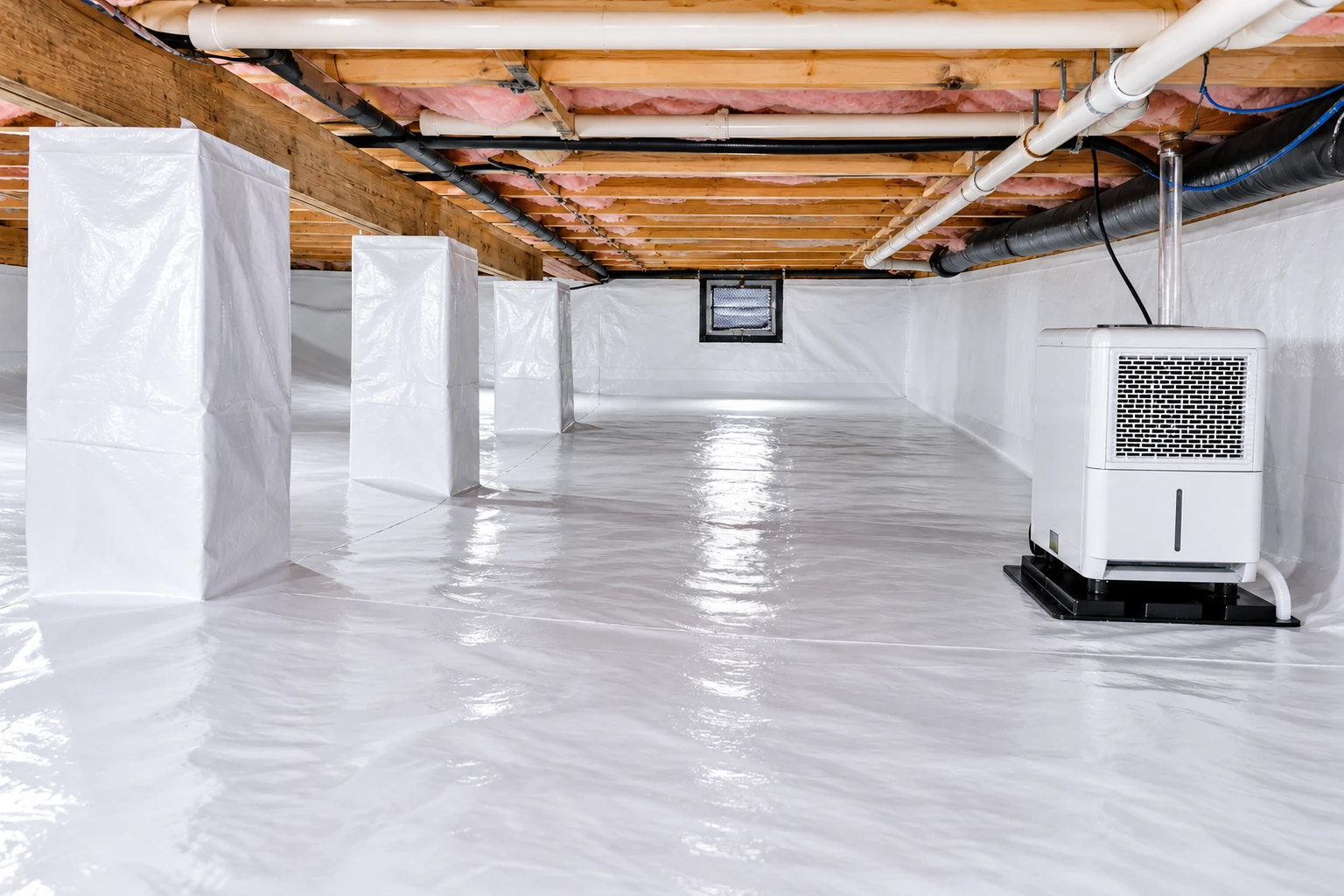
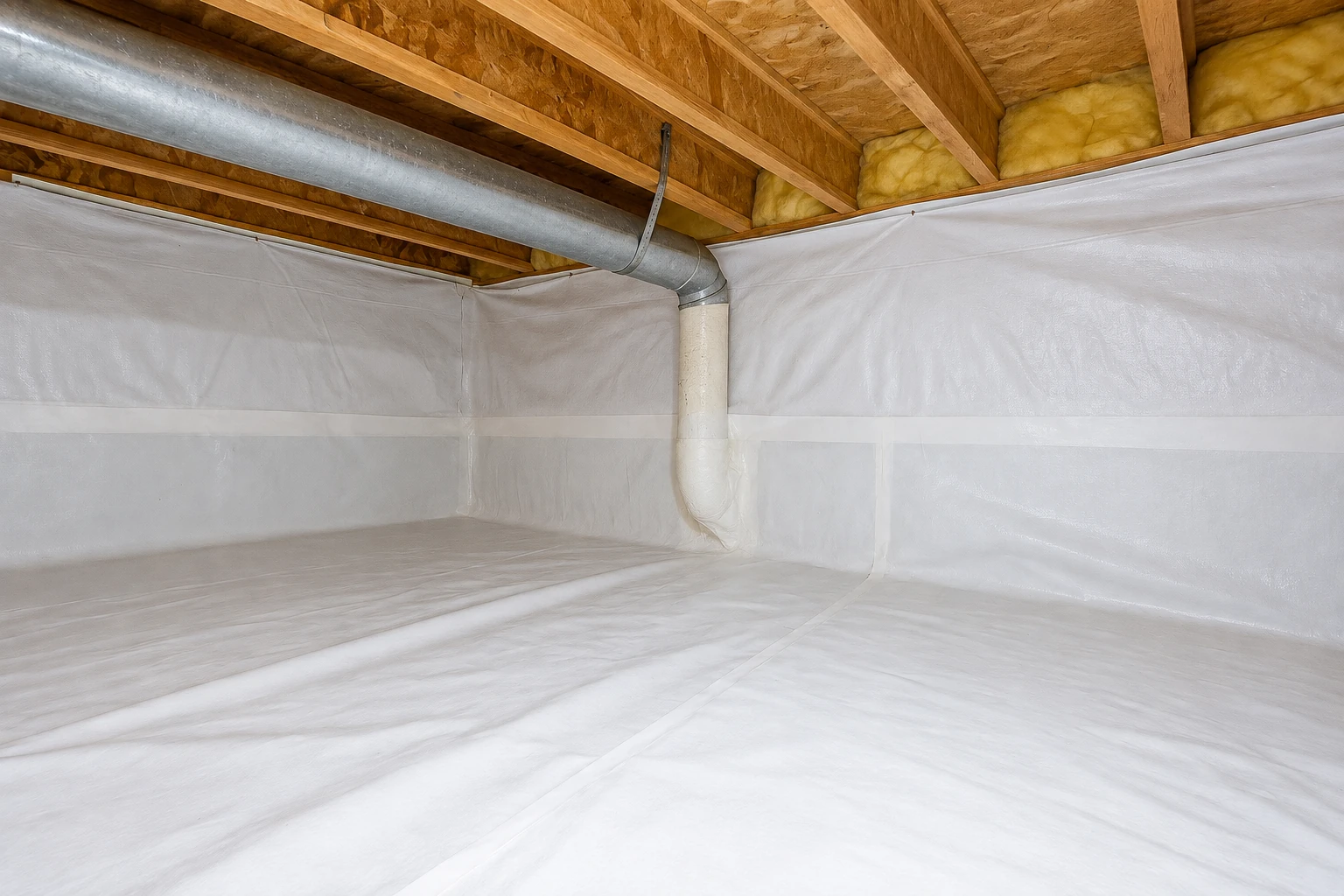
These example photos show sheet weights, seams and how far a barrier runs up walls and piers, to help you point at what you like.
Straight answers on thickness, cost, venting and licensing for a crawl space vapor barrier in Corona and the cities around it.
Federal weatherization guidance sets 6 mil as the minimum, while one barrier maker's guide calls 10 to 20 mil a common choice for homes. That maker says 6 mil tears easily and suggests a heavier sheet where people, tools or storage touch the floor. If a plumber crawls through your place every year, I'd lean heavier.
Across the US, installing a crawl space vapor barrier usually costs about $1,200 to $4,000 per job, and that's the market's range, not our price. Where yours lands depends on the size of the space, the sheet weight, how far up the walls it runs and any water work first. The estimate I write after looking under your house gives you your number.
Yes. Drainage and moisture problems in and around a crawl space get dealt with before it's sealed, so it stays dry once it's closed. One maker's guide adds fixing the slope of the ground outside, extending downspouts and turning sprinklers away before the sheet goes in, which can add steps to the plan. I'll tell you which of those your house needs.
Decide that early, because it shapes the rest of the job. One maker's guide treats it as a first choice and says sealing the space, called encapsulating, means planning supply air or a dedicated dehumidifier per local code. Federal guidance also calls for sealing seams and the spots where pipes pass through the sheet, but only in unvented crawl spaces.
Check whether each bid covers the whole floor, or as close as possible, and runs the sheet up the walls, columns and footings, as federal guidance calls for. Then ask how the installer keeps the crawl space's existing drainage working, since the same guidance says the sheet shouldn't block it. Ask any bidder those two things, us included.
In California, work that alters a structure needs a license from the Contractors State License Board once labor and materials reach $1,000, or whenever it needs a building permit or extra workers. That small-job limit used to be $500, and it only covers work needing no permit by someone who employs no one. We're fully licensed and insured.
We pick up the phone every day, so call (951) 393-1170 or send the form and I'll come see what's down there.